
Mt Suswa Conservancy


Some camping trips feel like expeditions. A drive to and camp at Mt Suswa feels more like an exhale. If you live in Nairobi, you understand.
One night out, no planning, no elaborate packing logic… only a single decision: head west and after a relatively short drive, pitch a tent on the rim of one of the world’s few volcanic double-caldera formations. My trip was on Christmas Eve, and everyone else, apparently, had other plans: there was no one there.
The road taken to Mt Suswa matters. A last-minute decision took me out through Karen from Westlands, to Ngong town, and an easy follow of signage to Suswa. This was a fateful decision – I’d never take this road and to my absolute delight, did so, avoiding the stress-track Naivasha route with its grinding mess of lorries on the A104 and B3 escarpment drop down to Mt Longonot. After Ngong, the Nairobi exhale begins immediately after.
Once out of Ngong, Mt Suswa reveals itself as you drop down the escarpment into the Rift. With only a fraction of the traffic found on the main Naivasha route, it’s an easy, sleepy wandering road, threading the drive into the rest of your Suswa experience, rather than postponing that experienced with the misery and traffic-fight of the other route.
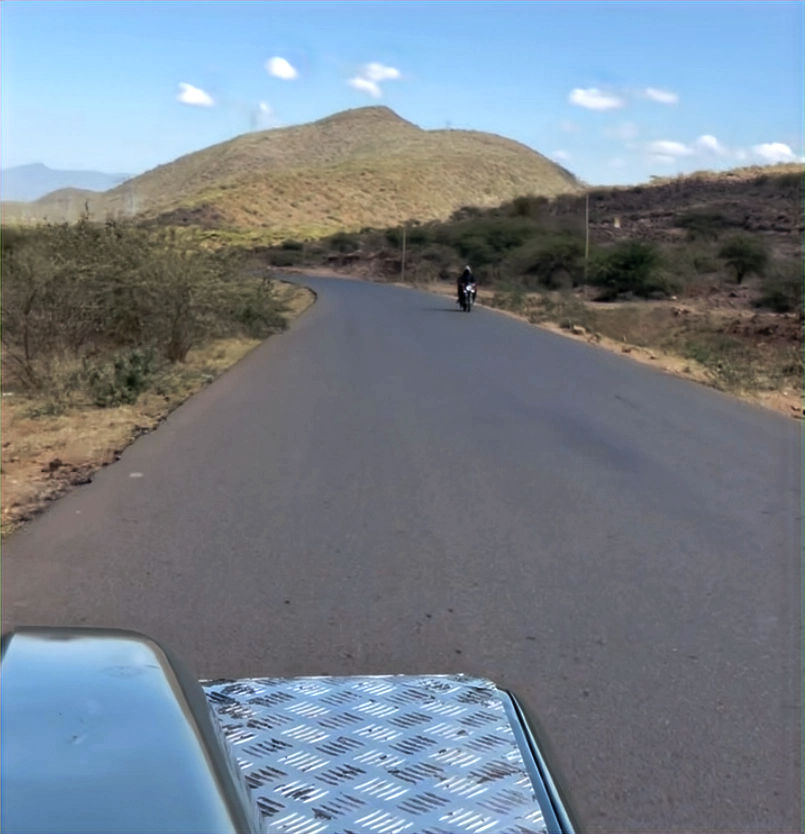
Mt Suswa…
Mount Suswa is one of Kenya’s quieter geological flexes, a striking but often overlooked volcano in Kenya’s southern Rift Valley, with a rare double crater, lava caves, and very little interest in tourism; the long and dusty road to the top makes Mt Logonot a more desirous quick trip out of Nairobi (and then there’s Naivasha, resorty spots and Hell’s Gate). The 2,356-metre shield volcano of Suswa features a vast outer crater enclosing a tilted inner one, a forested lost world ringed by steep cliffs with steady volcanic steam as a reminder that this place isn’t entirely done.
The mountain is laced with lava caves, including what’s been referred to as ‘baboon parliament’, where baboons hold nightly get-alongs and where a phalynx of bats take the day shift. Above ground, Suswa offers a raw, off-grid experience: no crowds, minimal infrastructure, and plenty of space to wander. Bring water.
Being a conservancy, it’s managed by the local Maasai community and the landscape carries a deep cultural and spiritual significance, tied to heritage and the Maasai diety Enkai. The mountain, especially the inner crater, is treated with reverence. Certain areas are closed to grazing and hunting, less by regulation than by long-standing tradition with the land itself.
From the summit, sweeping views of lava fields and the Rift Valley provide the evidence of why Suswa is a favourite for hikers and campers alike.

Back to the road…
A couple hours later Google will get you off the main Narok road in the right place, but once you leave the tarmac, its navigation is more interpretive than precise. Tracks fork, sub-divisions turn you around, and more than once you’ll wonder if you’re on the track to the campsite. Asking someone for directions doesn’t always pan out, but the best directions came from someone roadside, simple instruction to drive towards that tree (pointing in the distance) up on that ridge.
About another 2–3 km and I was there, on that ridge, and to my right a tree or two. In this landscape, it’s impossible to miss them: there are no competing landmarks.

Once you pass it, you eventually hit a dusty intersection, a four-way junction: the ‘main’ route continues straight ahead, to your left and right, a similar-width track crosses it, slightly less maintained. Turn left. Then stay on what looks like the main route. If it’s dry, your track should be kicking up a (un)healthy amount of dust. If the road starts dissolving into scrub or feels tentative, you‘ve likely on the wrong track.
From there, maintain your commitment to that dusty road and the campsite will eventually show itself.

If you need a life-line, call Harrison @ 0713 441 603. You’ll need to call him eventually, but if you don’t, he’ll eventually be the one who finds you. He will get you sorted with paying your camping and conservancy fees. Suswa is otherwise, and on the whole, low on drama, but big on scale.
The ground is dark and volcanic, and the caldera walls less like scenery than geo-architecture. It’s impressive, and while not postcard-pretty, its impressive in a commanding sort of way that reorders your sense of proportions. Standing on the rim, Nairobi has long shrunk away, and by now time is stretching outward, no longer checking in, as is often the case anywhere in the Rift.
One-night of camping has its own soundness: you don’t have the luxury of time to get comfortable, and that works here. Pick a spot, check the wind, grab some firewood, peg down the tent, lose a torch, find a different torch. Sit on the rim, watch the moon rise over the lave plateau and settle in.
Suswa at night is quiet in a very particular way, not an empty quiet, but a layered one. Rivers of wind move through tree branches, distant animals grapple with darkness, and an occasional cow reminds you you’re not that far gone. Mt Suswa does its own thing, unconcerned.

Firelight does what fire always does in many places, and here is no different. It collapses time and pulls you out of yourself, and does so with a provision of reason and comfort. And Suswa doesn’t demand that you stay for more than one night, but I’ll do two next time. There’s a hiking trail that circles the crater, some many hours of it, I have read. I sauntered up one such trail from the campsite, but only a short distance, and will be prepared to go further on my next trip. Unlike Mt Longonot, which is much more popular and can reach crowded levels on the way up on down, Mt Suswa is larger, more challenging, and worth the time. It encourages a good linger. Where the campsite sits, the sun comes up quickly, but there’s enough tree cover around to slip out from underneath the sun’s heat.
Living in Nairobi, Suswa is a great reset option, and a reminder of what wildlands feel like when not curated. My only regret is that it’s taken me this long to finally get there.
Mt. Suswa bush camping guide.


Comments