
Amboseli National Park

Updated: Jun 19
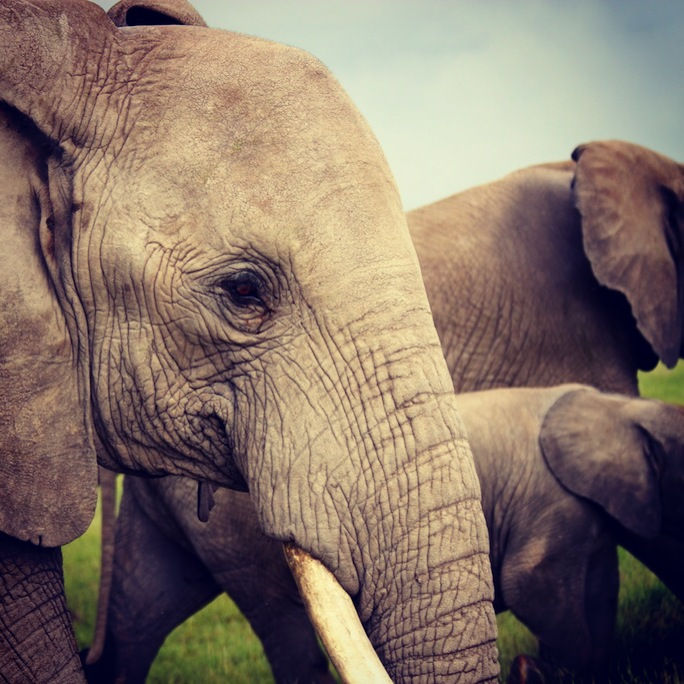
Venturing into Amboseli National Park – with its open savannahs and iconic Mount Kilimanjaro views – is not only an awesome experience, but an emblem of the crossroads of East African history, culture, and nature itself.
Kilimanjaro — which feels like an integral part of the park despite being in another country — has long been a symbol of natural beauty and cultural complexity, and for centuries has stood watch over the region’s shifting history: from the era of the slave and ivory trade to the politics of conservation today.
In the 19th century, during the reign of Sayyid Said, Sultan of Zanzibar, Kilimanjaro was a familiar landmark along the routes used by slave and ivory caravans moving through East Africa. The fertile lands around the mountain’s base supported these movements, linking local landscapes to global markets — including the demand for ivory in Europe and the United States, where it was used for items as mundane as billiard balls. In that sense, the mountain wasn’t just scenery: it was part of a geography through which people, plundered wealth, and resources were moved.
Today, Kilimanjaro sits in the background of one of Amboseli’s most iconic images: elephants crossing the plain with the mountain behind them — much like Nairobi National Park’s signature contrast of giraffe framed against city towers; but Amboseli and Kilimanjaro hold more than aesthetic appeal. For many East African writers and artists, the mountain has carried layered meaning over time: a marker of place and memory, a reference point for identity, and a presence in stories that reckon with history while paying attention (and tribute) to what remains: people, landscape, and continuity. While Hemmingway is too often a default reference, I’ll mention the book of essays and photographs titled Kilimanjaro: Mountain, Memory, Modernity as where to begin to dive into a leterary treatment of landscape not just as backdrop, but as memory, a place where history is lived and remembered.
Amboseli sits inside a quiet but – and in more recent times – important story: the politics of who gets to manage, and benefit from, conservation. In recent years, management of the park shifted away from the Kenya Wildlife Service to local Maasai communities through the Amboseli Ecosystem Trust, reflecting a broader recognition that protected areas cannot be sustained as islands of wildlife surrounded by communities expected to carry the costs, or to the exclusion of their own livelihoods, primarily pastoralism. Practically, this change acknowledges that elephants, grazing, water, and tourism all flow across mapped park borders, and that the people living with wildlife areas have to be part of the decision-making, not just the scenery around it, or, unfortunately as has been the case, displaced by it.
Historically, this matters because conservation in East Africa has often been entangled with older patterns of land control, exclusion, and outside authority, a legacy that echoes the same regional history of extraction and imposed systems that shaped earlier eras of trade and empire. Amboseli’s governance shift is therefore more than an administrative adjustment: it signals a slow move from ‘fortress conservation’ toward cooperative stewardship, where legitimacy is rooted locally, revenue is (at least in principle) shared more fairly, and conservation becomes a political contract rather than a directive. So, expect to see cattle and goats inside the park on your next visit. During our trip in early January, I watched as a cheetah eyed a herd of cattle 100 meters away. After some minutes, these two young make cheetahs opted to pursue the Thompson’s gazelles in the opposite direction.
Amboseli is one Kenya’s most beloved parks for one principal reason: the abundance of elephants. With an estimated 2000 elephants within the broader Amobseli ecosystem – reaching into Tanzania and south to the Tsavo park area, Amboseli is truly majestic.
In late February 2025, my son and I wandered to Amboseli in search of rugged roads, elephants, and some new spots for us to pitch our tent. We returned again in early January 2026 for another round. It’s now an annual pilgrimage we’ve committed ourselves to, to experience this hallowed ground and soak in the privilege to do so.
We’ve camped at two sites around Amboseli. Manjaro tented camp, near the southeastern Kimana Gate, and the Olgulului campsite, a few minutes from the Meshanani Gate on the western side.

Manjaro is a convenient, easy, and — particularly with young kids — a solid option. There are three, more of less, sites here, two of which are suitable for ground tents, and a larger third site designed with top-tents in mind (a gravelled space). On the whole, it can fit several more tents, as needed. Hot showers, a charging station, and toilets, all on site, and situated separate from the lodge with exclusive access for campers—a welcomed feature. (There’s also an option for buffet breakfast (6 am, for an early jump into the park) or dinner, both in the lodge, which is hearty, standard fare. It was said that the camp sites will soon have cooking set-ups, which I took to mean a permanent tabletop and choma spot. That will be welcomed, too.
Two other perks at the site include a wildlife watering hole meters away on the campsite side (separated by non-electric protective fencing) which is frequented by elephants, wild boars and even lions (so I was told). The other is great views of Kilimanjaro.
Henry (0721 301 309 whatsapp) runs the place, and Joshua, a sharp Maasai youngster, keeps the grounds in order. Drop a quick message to Henry on short notice and he’ll get you sorted.


The other camp site, Oglulului, is a true gem. Compared to Manjaro, which is somewhat of a wild camping luxury, Olgulului is a truly majestic wild-camp site. While outside the park, you might as well be in it. Giraffe, gazelle, zebra, and, from photos shared by Denis, the sites keeper, lions. You’re very much outside the wire at Olgulului, so have Dennis set you up with plenty of wood, burn a fire late into the evening to keep the lions at bay, and enjoy a silent, starry night.
Oglulului campsite
There are no amenities here beyond the wild open and stunning morning and evening views of Kilimanjaro, which from here sits across the expanse of the park’s entirety. There’s also space to roam by foot, with a 5 minute walk you reach a short bluff that has you perched above the park with an uninterrupted panorama west, south and east, sunrise and sunset. It’s simply beautiful.
Getting to Oglulului from within the park requires several kilometer drive across dead Lake Amboseli, which is a both a surreal parched-desert landscape and a whole lotta fun to do. If you’re going to Olgulului then chances are good you’re not with a hired operator, and by that I give emphasis to Olgulului not being ideal if you’re of the mind that you need to be in the park at the crack of dawn before the sun sends cats to shade and your photographic light to harshness. It’s a site to dial down your instruments of time and be there, so give yourself ample daylght when arriving, settle in, and when morning comes, sit in your camp chair and relax. Hakuna matata, if you’ll allow me to use a tired phrase. We had a tower of giraffes slumber by in the morning and a zeal of antelope the evening before. Unlike Manjaro, which is practical and comfortable for easy access into the park, Oglulului is not simply a park-entry point, but part of the immersive experience of the park itself. Expect a few people from the nearby village to stop by with some beads and to say hello; your camp fee is well appreciate to add to the community chest.

If traveling from Oglulului east on C103 to Namanga, beware that this is a solid 50 kilometers of corrugated road. With my old Defender’s suspension system, it’s a road I will never travel again. So, if you must, deflate your tires and jolt onward.
Amboseli is ultimately more than just a destination. It’s a place for reflection and a reminder of the commitments needed to the future of both people and wilderness. So, karibu to Amboseli, where history, culture, and wildlife come together in one unforgettable experience. You’ll be back again, so slowly slowly. February is a great time to visit… the first days of January? Not as much (due to the volume of people visiting), but still fabulous.
Campsites
Oglulului
See above if you skipped the rest of this post to come straight here. Oglulului is one of my favorite camping spots in Kenya. It's your own private wildlife sanctuary. Despite having no water or anything else, it's really a dreamy place where you can emmerse yourself in what the Kenya wild really is.
It's within a km or so of the Meshagani Gate, on the park's western side and the road to Namanga. It's on google maps , although not exactly pinned in the right spot. Call or whatsapp Dennis @ 0757 005 145. He manages the site and lives in the nearby village. If his number isn't working for you, ask someone at the Meshagani gate. It was 2000 KES a night, but that's likely negotiable. I'm happy to pay the fee as it's an amazing location.
KWS campsites
There's a KWS site near the main gate, Kimana. It's okay if you're main desire is to not wait at the Kimana gate the next morning to enter the park. But that wait is minimal. It's a cramped site and next to a road that runs parallel to the park. At this spot of that road is a side track to Manjaro tented camp which also has campsites for 1500 KES. See below. It's leaps better than the KWS site.
On some maps, and at some point in the past, there was a KWS campsite further inside the park not far from the Tortillas Camp. This KWS campsite no longer exists.
The website doesn't tell you much about the self-camping sites, but this place is great for it. Water, electricity hook ups, shower, toilet, and, if you want it, a buffet restaurant and cold beer and drinks. A good dose of endulgance if you've already been away for a while in the bush. And to boot, some of my favorite elephant photographs have been shot at the waterhole within 50 meters of where you'll set up your tent. Here are some of them:


Amboseli National Park Bush Camping Guide


Comments